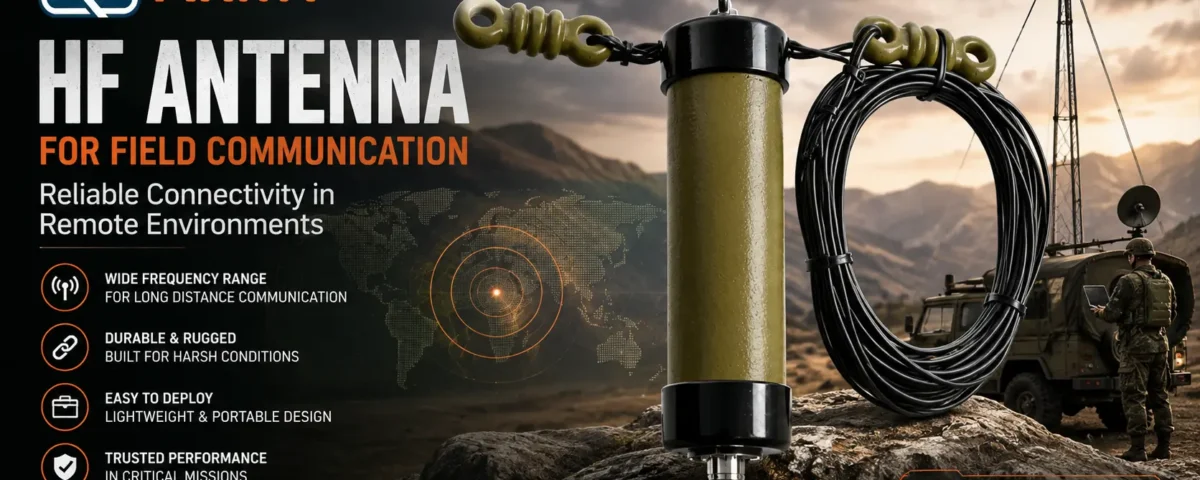
In remote locations where cellular networks and internet connectivity are unavailable, an HF antenna for field communication becomes an essential tool for maintaining reliable long-distance communication. From emergency response teams and military operations to research expeditions and industrial field projects, HF communication systems provide dependable connectivity across vast distances.
An HF antenna for field communication operates within the 3–30 MHz frequency range, allowing radio signals to travel beyond the horizon by reflecting off the ionosphere. This capability makes HF communication one of the most trusted solutions for operations in isolated or challenging environments.
Whether deployed as part of a portable communication setup or a permanent field station, the right HF antenna ensures clear signal transmission, easy deployment, and consistent performance.
What is an HF Antenna for Field Communication?
An HF antenna for field communication is a specially designed antenna used with High Frequency (HF) radio systems to establish reliable communication over long distances. Unlike conventional communication systems that depend on towers or satellites, HF radio can communicate across hundreds or even thousands of kilometers using skywave propagation.
Its simple installation, low infrastructure requirements, and wide frequency coverage make it an excellent choice for temporary camps, mobile command centers, disaster recovery teams, and remote industrial operations.
Why Choose an HF Antenna for Field Communication?
Choosing the right HF antenna for field communication ensures uninterrupted communication when conventional networks fail or are unavailable.
One of the biggest advantages of an HF antenna for field communication is its ability to transmit signals across long distances without relying on internet connectivity or mobile networks.
Most HF antennas operate across the 3 MHz to 30 MHz frequency range, making them suitable for multiple communication channels and operating conditions.
Field communication often requires rapid deployment. Modern HF antennas are lightweight and easy to install, allowing teams to establish communication within minutes.
An HF antenna for field communication is designed to withstand harsh weather conditions, including rain, wind, humidity, and extreme temperatures.
Portable HF antennas are ideal for field teams that require communication equipment that can be transported easily between locations.
Key Features of an HF Antenna for Field Communication
A quality HF antenna for field communication typically offers:
- Wide operating frequency (3–30 MHz)
- Stable long-distance signal transmission
- Durable weather-resistant construction
- Lightweight design
- Quick deployment
- Low maintenance
- Compatibility with various HF radio systems
- Reliable performance in remote environments
Applications of HF Antenna for Field Communication
An HF antenna for field communication is widely used across multiple industries and organizations.
During natural disasters, earthquakes, floods, or storms, conventional communication infrastructure may become unavailable. HF communication enables emergency responders to coordinate rescue operations effectively.
Defense organizations rely on HF communication for secure, long-range communication in remote operational areas where other communication methods may not be practical.
Government agencies and humanitarian organizations deploy HF communication systems to maintain communication during relief operations.
- Industrial Field Projects
Mining operations, oil and gas exploration, utility companies, and construction projects often require reliable communication in remote work locations.
Research stations located in forests, deserts, mountains, or polar regions depend on HF communication for maintaining contact with headquarters.
Ham radio operators frequently use HF antennas for field communication during outdoor activities, emergency preparedness exercises, and portable radio events.
Benefits of Using an HF Antenna for Field Communication
Investing in a high-quality HF antenna for field communication offers several advantages.
- Reliable communication over long distances
- Works without cellular networks
- Easy to transport and install
- Suitable for fixed and temporary stations
- Low operating cost
- Weather-resistant construction
- Supports voice and data communication
- Minimal maintenance requirements
- Excellent performance in remote locations
Installation Tips for Better Performance
To achieve optimal performance from your HF antenna for field communication, consider the following recommendations:
- Install the antenna as high as possible.
- Keep the antenna away from power lines and large metal structures.
- Use high-quality coaxial cables and connectors.
- Ensure proper grounding of the communication equipment.
- Inspect antenna wires and mounting hardware regularly.
- Follow the manufacturer’s installation guidelines for maximum efficiency.
Proper installation significantly improves signal strength and communication reliability.
Why Choose a High-Quality HF Antenna?
A professionally designed HF antenna for field communication delivers dependable performance in demanding environments. Whether your organization operates in disaster response, military missions, industrial projects, or scientific research, investing in a durable HF antenna ensures uninterrupted communication when it matters most.
With reliable signal transmission, wide frequency coverage, and simple installation, an HF antenna remains one of the most effective communication solutions for remote field operations.
Conclusion
An HF antenna for field communication is an essential component for organizations and professionals who require dependable long-range communication in remote environments. Its ability to operate independently of cellular infrastructure makes it invaluable during emergency situations, field operations, military deployments, industrial projects, and outdoor expeditions.
Choosing a durable and efficient HF antenna for field communication ensures stable connectivity, reliable performance, and quick deployment wherever communication is critical. Whether for permanent installations or portable field setups, an HF antenna provides the confidence and reliability needed for successful operations.